


You turn on the shower, wait for it to warm up, and get nothing but cold water. For a household in North Lakes, Mango Hill or Kallangur, the immediate question is usually the same: has the hot water system died, or is there a fault worth repairing?
The answer is not always obvious. A cold shower can be caused by a power interruption, a failed heating component, a gas supply issue, a faulty tempering valve or a storage tank that simply cannot keep up with demand. Those problems have very different solutions and very different costs.
Before committing to a replacement, there are a few observations you can make without opening equipment, touching wiring or attempting plumbing or gas work. This guide walks through five checks, the warning signs that need urgent attention and a practical way to choose between repair and replacement.
First: is the problem everywhere, or only at one tap?
Open a hot tap in the kitchen and another in a bathroom, giving each enough time for water already sitting in the pipe to clear. If one outlet runs hot but the shower stays cool, the problem may be local to that shower’s mixer or its temperature-control components. If every hot outlet is cold, the investigation is more likely to involve the hot water supply, system or controls.
There is a third pattern worth recognising: water begins hot, then quickly goes lukewarm. That may point to limited stored hot water, restricted recovery or unusually high household demand. It does not, by itself, prove that the tank has failed.
Note what you find and when the problem started. A plumber can narrow down likely causes much faster when you can describe whether the fault is constant, intermittent, limited to one fixture or linked to a particular time of day.
Five safe checks before deciding the system needs replacing
1. Check whether other taps have hot water
Compare the kitchen, laundry and shower rather than judging the whole system by one outlet. A single faulty mixer can imitate a hot water failure. If your shower goes cold whenever someone uses the kitchen tap, mention that too: pressure changes, flow rates and temperature-control devices can all be relevant to diagnosis.
Do not remove mixer cartridges or dismantle valves yourself. The safe check is simply observing what happens at normal taps.
2. Look for a wider power outage or a visibly tripped switch
If you have an electric storage unit or heat pump, check whether your home has power and whether other appliances are behaving normally. You can look at the switchboard from a safe position, but do not remove covers or touch damaged, wet or suspicious equipment. A labelled breaker or safety switch that has operated is useful information to pass to the electrician or plumber.
If the safety switch or breaker repeatedly trips, stop trying to reset it. A persistent trip may indicate an electrical fault, moisture or defective equipment. Repeated switching is not a repair and may expose you to risk. Electrical testing and repairs belong with a licensed electrician.
Some electric storage systems also use controlled-load tariffs or timed heating. If the household used an unusually large amount of water, a tank may need time to reheat according to its supply arrangement. A qualified tradesperson can establish whether it is recovering normally.
3. Check the gas supply without attempting a repair
For a gas storage or continuous-flow system, ask whether other gas appliances are operating as normal. That helps establish whether the issue may extend beyond the hot water unit. Some continuous-flow systems also show a fault code on a controller, which can be photographed or written down for a technician.
Do not open the gas appliance, attempt to relight it contrary to the manufacturer’s instructions or interfere with regulators and pipework. If you smell gas, do not operate electrical switches or flames; move to safety and contact the appropriate emergency gas service.
If the problem happens only when two showers are used simultaneously, tell the technician. Continuous-flow appliances need enough available flow and heating capacity for the household’s peak demand.
4. Look for leaks, corrosion or unusual discharge
From a safe distance, look around the base of the hot water unit. Is water pooling? Is there obvious rust around the tank seam? Is water streaming rather than occasionally dripping from a relief discharge pipe? A small discharge during heating can be normal for some systems, but persistent or heavy leakage needs assessment.
A failed valve may be replaceable; a corroded and leaking storage cylinder is a very different problem. Avoid touching hot pipework, blocking a relief pipe or removing covers. If water is entering an electrical area, keep clear and arrange urgent professional assistance.
A photograph of the leak and the unit label can help the tradesperson prepare. Take photos only where you can do so without contacting hot, wet or electrical parts.
5. Consider how much hot water the household has used
Before the failure, did you have enough hot water for everyone? A four-person household taking long morning showers may empty a storage tank that served a smaller household perfectly well. Guests, a new bathroom, a larger bath or a shift in showering habits can expose an undersized system.
Think about the pattern. Is the first shower hot but the third cold? Does the tank recover by the afternoon? Does the water stay lukewarm even after a long period without use? This information can distinguish a capacity mismatch from a component fault.
When no hot water is an urgent plumbing problem
Loss of hot water is inconvenient, but it is not always an emergency. The situation changes when there is active leaking, a smell of gas, suspected electrical damage, unusually hot water that could scald, or a water supply that cannot be controlled safely.
- Gas smell: leave the affected area and contact emergency gas assistance; do not use switches, phones in the immediate hazard area or ignition sources.
- Electrical signs: burning smells, sparking, a wet switchboard or repeated tripping need qualified electrical assistance.
- Significant water leak: keep clear of hot water and electricity; use an accessible, safe isolation valve only if you already know how to operate it.
- Scalding or unpredictable temperature: stop using the affected outlets until a professional checks the temperature-control and tempering arrangements.
For other faults, record the symptoms and arrange an inspection. The goal is to restore reliable hot water without replacing equipment unnecessarily.
Repair or replace: what actually determines the smarter decision?
A replacement is not automatically justified because a system is old, and a repair is not automatically sensible because a part can be changed. The decision usually comes down to the condition of the tank or heat exchanger, the cost and reliability of the repair, parts availability and the suitability of the system for the household.
Repairs that may make sense
Depending on diagnosis, issues with valves, thermostats, heating elements, controls or ignition components may be repairable. A relatively sound system with a clearly identified component fault is a strong candidate for a repair quote. Repairing also avoids the disruption of changing the installation location or connecting a different type of system.
When replacement deserves serious consideration
A storage tank leaking through its cylinder, extensive corrosion, recurrent expensive failures or a model with difficult-to-source parts can change the calculation. So can a system that is no longer large enough for the family’s needs. Spending money on a repair only to face another failure soon afterwards can be more expensive than selecting a suitable replacement now.
Ask for the options to be explained separately: the immediate repair cost, the realistic condition of the remaining system, and the installed cost of a replacement that fits your current demand.
How to choose a replacement without buying the wrong hot water system
If replacement is the right choice, the next question is which system suits the property. Comparing only the ticket price of a tank can be misleading because installation, energy use and household demand matter as well.
- Electric storage: generally straightforward where a suitable electrical supply and space already exist; tank capacity and tariff arrangements affect results.
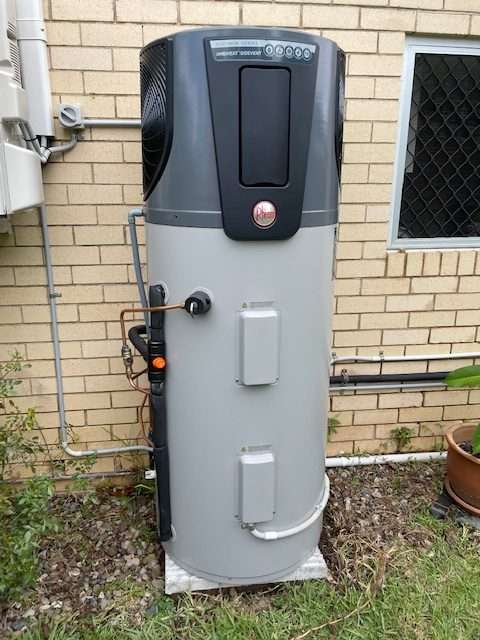
- Heat pump: extracts heat from the air rather than relying solely on direct electric resistance heating. Placement, noise, airflow, ambient conditions and suitable household scheduling all matter.
- Gas continuous flow: produces hot water when needed but relies on suitable gas supply, appliance sizing and adequate flow through fixtures.
- Solar hot water: can use roof-mounted collectors with boosting, though roof suitability, shading and maintenance need consideration.
For example, a couple with a single bathroom might prioritise lower running costs and modest peak demand. A busy household with two bathrooms may prioritise back-to-back showers. Those are different design problems, even if both families currently own the same size tank.
RJT Plumbing & Gas has a hot water recommendation tool that asks about household size, hot water use, existing infrastructure and priorities. It can help you compare suitable options before requesting a site-specific quote. The final system and installation details still need trade assessment.
What changes the installed price?
Homeowners often ask for a replacement price before anyone has looked at the property. The useful number is the complete installed cost, not a generic advertised unit price. That may include removal of the old system, plumbing or valve changes, safe electrical or gas connections, drainage, support and positioning requirements, access restrictions and any necessary compliance work.
A simple like-for-like replacement in an accessible position may involve less work than relocating a unit, changing energy type or installing a heat pump in a constrained side passage. Ask for an itemised scope so you can compare more than the brand name.
What to tell RJT when you get in touch
Five useful details will speed up the conversation: your suburb; system type; approximate age or a photograph of the model label; whether every tap is affected; and whether there is leakage, a fault code or tripping. Also mention whether the problem started suddenly or has been getting worse over several weeks.
RJT Plumbing & Gas works across North Lakes, Mango Hill, Griffin, Kallangur, Murrumba Downs and nearby Moreton Bay suburbs. For an urgent fault, visit the emergency hot water service page or call 0417 860 064.
The bottom line: five minutes of safe observation can make a professional diagnosis quicker. It can also prevent an unnecessary replacement. But when water, gas or electricity is behaving unsafely, stop checking and call a licensed professional.
