


You want a new toilet, not a whole new bathroom. The tiles are staying, the layout works and a modern suite seems like a straightforward refresh. It may be, but the replacement needs to suit both the plumbing and the surfaces around the old toilet.
A toilet that connects correctly can still leave an exposed outline on the floor, an old fixing hole on the wall or a patch that the previous cistern covered. These details are easier to discuss before buying than after the old suite has been removed.
If you are planning a toilet replacement in North Lakes or nearby Moreton Bay suburbs, start with the whole installation. The useful question is: can this particular suite give us a workable result while keeping the existing finishes?
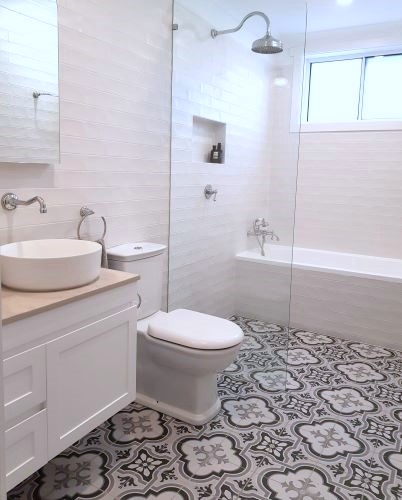
Check what the old toilet is covering
The pan footprint is the area occupied by the base of the toilet. Two suites with similar overall dimensions can have differently shaped bases. A wider base at the front does not necessarily cover the same area at the back.
Look at the visible junction between the pan and floor without disturbing it. Note any silicone outline, discolouration or obvious fixing locations. Take a wide photograph and a closer view from each side. These are useful enquiry photos, although they cannot show the condition underneath.
The existing toilet may have been fitted before a later flooring change. Alternatively, there may be continuous tiles beneath it. Until the installation is assessed, avoid treating either possibility as certain.
Ask the plumber how the proposed pan footprint compares with the old one, and what can only be confirmed once the suite is lifted. If spare matching tiles are available, mention them. If they are not, make retaining the visible floor a clear part of the brief.
The waste connection is a separate fit check
Do not choose a replacement solely because its base looks large enough. The position and type of waste connection also need to suit the installation.
An S-trap arrangement connects through the floor; a P-trap arrangement connects through the wall. The relevant set-out measurement depends on that arrangement. Caroma’s toilet suite guide illustrates the different configurations and distinguishes the waste connection from the cistern’s water inlet.
Some models offer specified connection flexibility, but that does not make every suite interchangeable. Send the exact model and its technical drawing to the plumber. Have the existing connection checked against that product rather than relying on a salesperson’s general description or a measurement guessed from the outside.
There is no need to loosen the toilet to make an enquiry. Where the connection is concealed, say so and provide clear photographs. An assessment is more useful than an uncertain measurement presented as fact.
Look behind the cistern as well as beneath the pan
A smaller or differently shaped cistern can reveal an area that has not been visible for years. That might be an old paint colour, fixing marks or a gap in the tiled finish. A wall-faced design also needs to be considered alongside skirtings and the wall profile.
Ask whether the proposed suite is intended to sit against the finished wall and whether anything currently projects into that space. Include a side photograph showing the cistern, skirting and water connection.
Changing from an exposed cistern to a concealed cistern is a different project decision. It introduces work within or around the wall and should be scoped accordingly. A photograph of a streamlined toilet does not tell you what is required to achieve that appearance in your bathroom.
Check the water inlet and the space you use
The water supply position deserves its own check. Bottom-inlet and back-entry arrangements are different; an existing tap position should not be assumed to suit a new enclosed design. Have the plumber confirm how the selected cistern will connect and remain serviceable.
Then compare the toilet’s overall projection into the room. Imagine the door opening, a person standing at the basin and someone cleaning beside the pan. A suite can fit the plumbing while making a compact room less comfortable.
Consider the seat height and shape too. If a particular height is important, try a comparable display model where possible and discuss the actual product dimensions. Keep practical comfort in the shortlist alongside appearance.
Compare the finished job, not just the toilet price
A lower product price does not tell you whether that suite is the simpler replacement. One option may suit the existing arrangement; another may require additional plumbing or leave a finishing job to resolve.
Ask the quote to identify the supplied suite or the model you will provide, removal and disposal of the old toilet, installation work and any agreed making-good. Clarify how unexpected damage or an unsuitable surface will be handled before additional work proceeds.
It helps to compare two realistic options: a replacement selected to work with the existing room, and your preferred alternative with any extra work clearly identified. You can then decide whether the appearance is worth the difference in scope.
Water efficiency is another product comparison. The Australian Government’s WELS guidance explains the rating label. Use it alongside the fit assessment; a star rating does not establish plumbing compatibility or coverage of the old footprint.
Send a useful enquiry before ordering
Include wide and side photographs, the approximate age of the bathroom, the proposed product link and a simple priority: “We want to replace the toilet and keep the existing tiles.” Mention any current leak, rocking or drainage problem so it can be assessed separately.
RJT Plumbing & Gas Solutions provides household plumbing services. Contact the team to discuss the existing installation and your shortlist before committing to a suite.
Frequently Asked Questions
Can I replace a toilet without replacing the bathroom tiles?
It may be possible if the new suite suits the plumbing and existing surfaces. The condition beneath the old toilet and coverage of old marks need assessment; retaining every visible finish cannot be guaranteed from a photograph.
Will a bigger toilet base cover the old footprint?
Not necessarily. Base shapes vary, so overall width and length do not prove that the old outline or fixing locations will be covered. Compare the actual product drawing with the existing installation.
Does an adjustable set-out mean any toilet will fit?
No. Adjustment has model-specific limits and does not resolve every water inlet, wall, footprint or clearance issue. Have the exact suite checked before buying.
Should I remove the toilet to measure the waste connection?
No. Send accessible photographs and arrange a plumbing assessment. Do not loosen the suite or disturb concealed connections to prepare an enquiry.
What should I ask to have included in the quote?
Confirm the toilet model, supply responsibility, removal and disposal, plumbing work and any making-good. Ask how unexpected damage or unsuitable surfaces will be discussed before extra work proceeds.
